





A Second Life for the City Center: How to Make Money Renovating Old Housing Near Cleopatra Beach
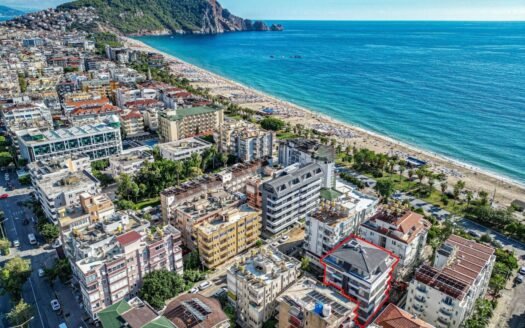
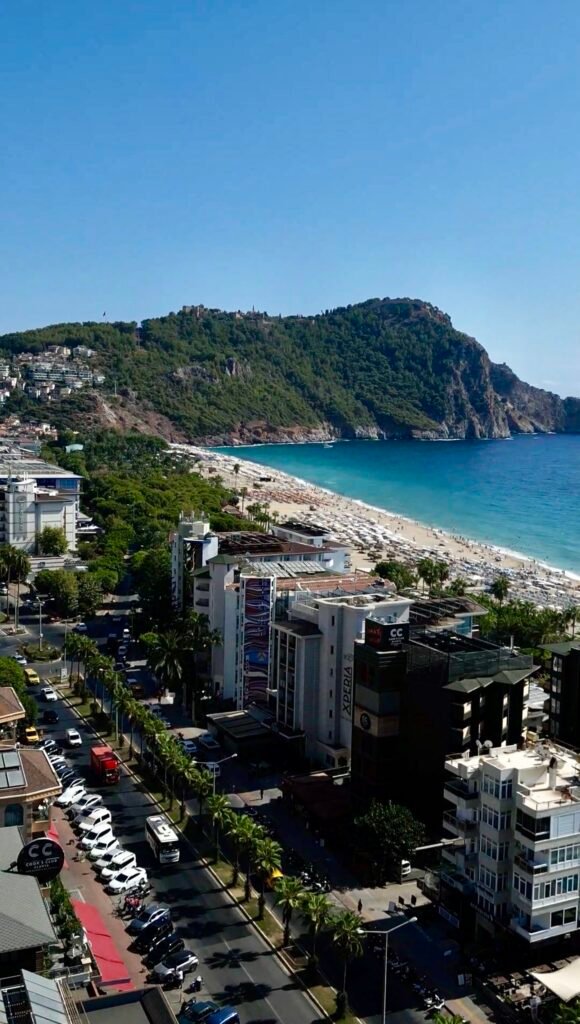
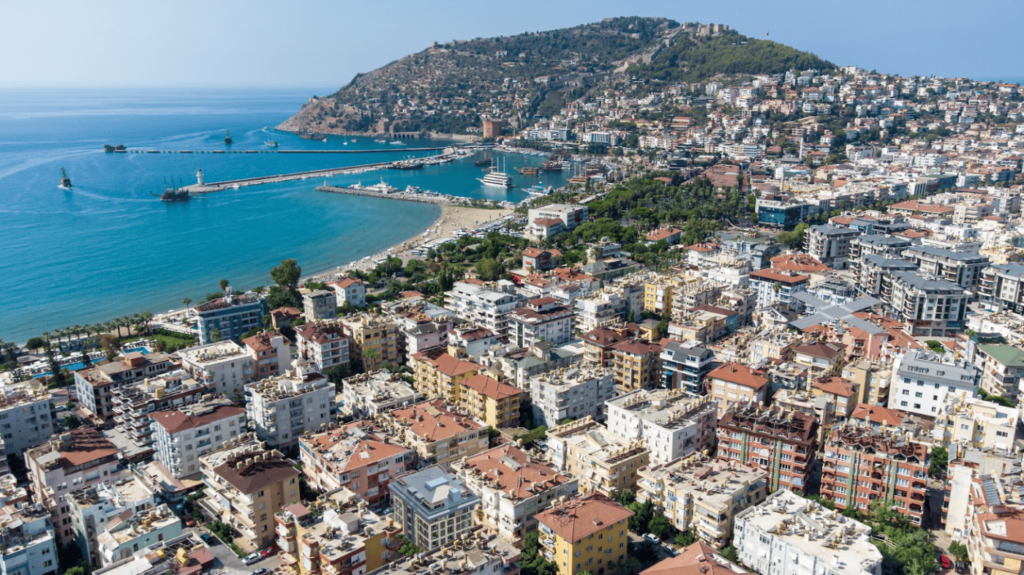
Today, central Alanya is more than just a postcard with a view of a fortress and the sea. It's an area where historic buildings from the 1980s and 1990s sit alongside scattered modern residences, and the price per square meter is determined not so much by the condition of the walls as by geographic location. Cleopatra Beach, the marina, pedestrian thoroughfares, schools, and clinics—all within a kilometer. And it's precisely this concentration of infrastructure that makes the older housing stock in the center not a problem, but an asset. But only for those who understand how to manage it.
Renovation in Alanya isn't a trendy or "quick fix." It's an engineering and legal project with clear rules, deadlines, and financial models. In this article, we'll explore the process of purchasing old housing for renovation, the laws governing demolition and new construction, the main risks, and how to calculate real returns. No marketing promises, just practical experience, numbers, and step-by-step instructions for investors willing to work systematically.
1. What is a "buy-to-demolition" property in Alanya: terms, myths, and facts
The first thing to clearly distinguish is that in Turkey, it's rare to demolish a single house for the sake of demolishing one. The term "buying for demolition" in local practice refers to the consolidation of land shares, obtaining an urban transformation permit (kentsel dönüşüm), and constructing a new building on the site of the old one. The investor isn't simply buying an apartment, but a share in the plot, development rights, and the future square footage of the new project.
Why exactly is it worth it? Buy an apartment in the center of Alanya from CleopatraBecause land here is more expensive than concrete. Old five- and seven-story buildings in this area are often built to outdated standards: no elevators, narrow stairwells, poor insulation, exposed electrical wiring, and zero parking. From a modern buyer or renter's perspective, this is unsaleable property. From a developer's perspective, it offers an opportunity to build 8-10 stories with underground parking, panoramic windows, a spa, and ground-floor retail, all while maintaining the same location.
Myth #1: «You can demolish anything if you have the money.». No. The Alanya municipality operates strictly within the zoning plan. Heights, setbacks from red lines, development coefficients (TAKS/KAKS), and seismic requirements are all documented before work begins.
Myth #2: «It’s enough to buy one apartment and start construction.». No. Consolidation of a plot typically requires the consent of at least two-thirds of the owners based on area and number of shares, while a full purchase and redevelopment often requires 100%. Without legal registration of shares and notarized agreements, the project will stall at the application stage.
Myth #3: «Profit is guaranteed, because the center is always in demand.». Profit is guaranteed only if three conditions are met: proper legal clearance, controlled construction costs, and timely market entry. Errors in any of these areas will wipe out the entire margin.
2. Legal Framework: Law No. 6306 and How It Works in Practice in 2026
Screenshot
The primary regulatory framework is the Urban Transformation Law No. 6306 (Kentsel Dönüşüm Kanunu), with amendments that came into force in 2024–2025. The law does not grant the right to demolish buildings arbitrarily. It establishes a procedure for recognizing a property as a "risk zone" or "transformation zone," after which the redevelopment process is launched.
Key stages according to the law:
- Risk Analysis Report (Risk Analizi Raporu). Ordered from an accredited laboratory, engineers inspect the load-bearing structures, concrete, reinforcement, and foundation. If the building does not comply with current seismic standards (TS EN 1998), the report is issued within 15–30 days. Without it, the municipality will not accept the application.
- Owner consent. To initiate the process, written consent is required from owners whose share constitutes at least two-thirds of the total area and number of shares in the building. In practice, in central Alanya, investors tend to use 100% to avoid legal blockages and simplify the division of new space.
- Municipal approval of the project. The architectural, structural, and engineering designs undergo an assessment by the İmar Müdürlüğü. Compliance with the İmar plan, fire safety, accessibility for people with disabilities, landscaping, and parking regulations are reviewed.
- Issuance of a construction permit (Yapı Ruhsatı). After payment of state fees, insurance, and project approval, the Ruhsat is issued. It is valid for three years and can be renewed.
- Construction and commissioning (İskan). Upon completion of the work, an independent engineer (fenni mesuliyet) signs a certificate of compliance. The municipality issues the iskan, after which the tapu can be divided into new apartments.
Important nuances for 2026:
- Energy efficiency controls have been tightened. New buildings must meet Energy Efficiency Class B or higher certification.
- Mandatory backup power supply systems have been introduced for buildings higher than 6 storeys in tourist areas.
- The Alanya Municipality requires preliminary consultations (ön görüşme) before submitting the full application package. This saves 2-4 months to correct any issues.
- It is prohibited to subdivide plots of less than 300 m² in the central zone without the approval of the urban development department.
Working without a licensed urban planner and structural engineer in 2026 is a surefire way to be denied a building permit or have the construction suspended by the courts. Skimping on specialists at the start costs 30–501 TP3T of the project budget.
3. Step-by-step algorithm: from searching for a property to the delivery of a new home
Renovation is a conveyor belt. Each stage depends on the previous one. Below is a real timeline and actions tested on projects in the area. Cleopatra Beach.
Stage 1. Due Diligence and Selection of a Property (2–4 weeks)
- Tapu check via e-Devlet: no hipoteka (collateral), miras (inheritance disputes), kaçak kat (illegal extensions), icra (judicial arrests).
- Request İmar Durumu Belgesi in the municipality: height, TAKS/KAKS, setbacks, permitted use.
- Visual and technical inspection: cracks in load-bearing walls, foundation condition, moisture, electrical wiring, elevator (its absence is a plus for renovation, a minus for current rentals).
- Register of owners: how many shares, who lives in Turkey, who lives abroad, are there powers of attorney?.
Stage 2. Negotiations and agreement drafting (3–8 weeks)
- A preliminary agreement (ön anlaşma) setting out the terms: land share vs. share of the new building, deadlines, penalties for withdrawing from the deal, and financing arrangements.
- Notarization of the consent for the sale of property. For owners abroad, this can be done through a consulate or an apostille with a translation.
- Opening an escrow account or notary deposit to secure obligations.
Stage 3. Design and approval (2–4 months)
- Ordering an architectural project taking into account the IMA plan and market requirements (1+1/2+1 layouts, balconies, views).
- Static calculation, MEP (mechanical, electrical, plumbing), fire project, accessibility report.
- Submission to İmar Müdürlüğü, receiving comments, corrections, resubmission.
- Payment of state fees, DASK, insurance of construction and installation risks.
Stage 4. Construction supervision and erection (12–18 months)
- Select a contractor with a license, portfolio, and financial stability. Verification through the SGK (employee registry) and the court case registry.
- Signing a contract with staged payment: 20% advance, 60% upon completion of work, 20% after iskаn.
- Appointment of independent technical supervision (fenni mesuliyet). Weekly reports, photographic documentation, material verification.
- Reserve fund 15–20% for inflation, delivery delays, changes in the project.
Stage 5. Surrender, division of tapu and monetization (1–2 months)
- Acceptance by the municipality, obtaining İskan.
- Dividing Tapu into new apartments (kat irtifakı → kat mülkiyeti).
- Exit strategy: pre-sale at the excavation stage (discount 10-15%), sale after iskan (premium 20-30%), long-term lease or short-term licensed rental.
The average project cycle in central Alanya is 18–28 months. Deadlines are only extended in the event of legal disputes with neighbors, municipal delays, or force majeure. Plan your cash flow with this window in mind.
4. Financial model: numbers, margins and real profitability
Talking about renovation without figures is misleading. Let's look at the economics using a typical property as an example. real estate near Cleopatra Beach (2026).
Input data:
- Old house: 6 floors, 12 apartments, total plot area 450 m².
- Redemption of shares: $95,000 per apartment × 12 = $1,140,000 (or consolidation through kat karşılığı: land owners 45%, investor 55% of new space).
- Permitted development: 8 floors, 16 apartments of 90 m² = 1,440 m² of saleable area.
- Construction cost: $750/m² (premium finishing, smart home, swimming pool, parking) = $1,080,000.
- Design work, permits, taxes, insurance, supervision: $180 000.
- Total costs: ~$2 400 000.
Income part:
- The selling price of a new apartment in the center near Cleopatra: $2 900–3 300/m².
- Average bill: $3 100 × 90 m² = $279,000 per apartment.
- Revenue from 100% sales: 16 × $279,000 = $4,464,000.
- Gross margin: $2,064,000 (46%).
- Net profit after taxes (KDV, income tax, notary, lawyer, marketing): ~$1,350,000–1,500,000 (30–34% ROI).
Key profitability drivers:
- Speed of implementation. Pre-sale at the foundation stage reduces the cash flow gap and attracts financing.
- Cost control. Fixed contracts with suppliers, procurement of materials before seasonal increases, independent cost audits.
- Launch Timing. The central Alanya market is cyclical: peak demand is March–June and September–October. Launching sales in November–December could reduce prices by 5–8%.
- Tax optimization. Registering through a Turkish legal entity allows for deductions for KDV, depreciation, and loss carryforwards. Individuals pay a progressive tax without deducting construction costs in full.
Margin-killing mistakes:
- Purchase of shares without checking for encumbrances → judicial blocking for 6–12 months.
- Lack of a reserve fund → construction stoppage due to inflation in rebar/concrete prices.
- Direct sales without pre-marketing → finished apartments remain idle for 4–6 months, capital is frozen.
- Ignoring KDV and capital gains tax → fine of 50–100% from the unpaid amount.
Renovation isn't passive income. It's active project management with clear financial modeling. Those who view "buy-build-sell" as a linear process lose capital. Those who build a cash flow model with three scenarios (optimistic, baseline, and stressful) make money.
5. Risks that break projects (and how to avoid them)
 The Turkish real estate market is transparent, but it doesn't forgive amateurism. Below are real-life cases and countermeasures.
Risk 1: Neighbors refuse or withdraw consent
Even with a notarized agreement, the owner can change their mind, file a lawsuit, or demand a renegotiation of the share. Solution: include penalties for unilateral withdrawal in the agreement, record the terms in an escrow account, and conduct mediation before filing the application. In 80% cases, conflicts are resolved during preliminary negotiations with a clear project visualization and guaranteed deadlines.
Risk 2: Change of the IMA plan or refusal of the municipality
Urban planning regulations are subject to change. The Alanya Municipality has tightened requirements for parking and landscaping in the central area in 2025–2026. Solution: conduct a preliminary consultation before purchasing shares, commission an Imar analysis from an independent plancı, and include a 10% area reserve in the project to allow for potential adjustments.
Risk 3: Increase in construction costs
Prices for steel, cement, double-glazed windows, and labor are volatile. Solution: Fix prices in contracts with suppliers for 6–9 months, use a currency clause (EUR/USD), reserve 15–20% of budget, and hire an independent quantity surveyor to audit estimates.
Risk 4: Delays in receiving an iskan
Municipal inspections can be delayed due to incomplete documentation or violations during construction. Solution: maintain a photo/video archive of each stage, involve Fenni Mesuliyet from the first weeks, submit documents to Iskаn 30 days before actual completion, and prepare a compliance report in advance.
Risk 5: Fall in demand during the construction period
The market may adjust. Solution: Launch pre-sales at the foundation stage with a discount of 10–12%, secure deposits in a notary deposit, diversify distribution channels (agencies, direct sales, corporate clients), and maintain 3–6 months of operating reserves.
Each of these risks is manageable, but only with a systematic approach. Renovation does not tolerate improvisation.
6. A practical checklist for investors
Don't initiate a deal until you've completed this list. Save it and use it as a working tool.
✅ Legal clearance:
- Tapu statement no older than 30 days (e-Devlet)
- Report on the absence of hipoteka, icra, miras spores
- Checking for kaçak kat through the municipal registry
- Notarized power of attorney from owners abroad (if any)
✅ Urban planning analysis:
- İmar Durumu Belgesi with indication of TAKS/KAKS, height, indents
- Consultation with şehir plancısı for compliance with the current plan
- Calculation of permitted sellable area vs. actual
- Checking requirements for parking, landscaping, and fire lanes
✅ Technical assessment:
- Risk Analysis from an Accredited Laboratory
- Structural engineer's report on load-bearing capacity
- Inspection report for electrical wiring, plumbing, and roofing
- Photographic recording of the current state (for recording before starting work)
✅ Financial model:
- Construction estimate broken down by stages
- Budget for permits, taxes, insurance, supervision
- Reserve Fund 15–20%
- Cash flow forecast for 24 months with three scenarios
✅ Contractual basis:
- Notarial agreement with owners (shares, terms, penalties)
- Contract with a contractor (staged payment, guarantees, penalties)
- Agreement with fenni mesuliyet (weekly reports, right to stop work)
- Escrow account or notary deposit to secure obligations
✅ Exit Strategy:
- Pre-marketing 4 months before completion
- Distribution channels (agencies, direct, corporate)
- Pricing policy (pre-sale vs. post-sale)
- Tax structure (individual vs. legal entity, KDV, deductions)
If at least three points are not met, the project is not ready for launch. Renovation begins not with the purchase, but with preparation.
7. Alternatives: When Renovation Isn't Your Path
Not every investor should get involved in construction. It's a professional game with high entry barriers, legal complexities, and operational burdens. Let's consider who should consider other options.
Not suitable if:
- You are looking for passive income without daily involvement.
- You don't have a local team (lawyer, engineer, contractor, marketer).
- Investment horizon less than 24 months.
- You are not prepared for cash flow gaps and capital reserves.
- Your budget does not cover 100% of share buyout + construction + reserve.
Alternatives with lower entry barriers:
- Buying finished apartments in new residential complexes in the center. The margin is lower (15–25%), but the risks are minimal, liquidity is high, entry from $120,000.
- Shared participation (kat karşılığı without buyout). You provide the land, the contractor builds, and you divide the space according to the contract. Less capital is required, but legal control and trust in the partner are required.
- Long-term lease with subsequent sale. Purchase of older properties, cosmetic renovations, lease for 3-5 years, and sale after location growth. Income of 8-12% per annum, low operating costs.
- Investments through REITs or real estate funds. For those seeking exposure to the Alanya market without managing assets. High liquidity, yields of 6–9%, but no control over assets.
Renovation is a tool for those prepared to manage a project from start to finish. If your goal is to preserve capital and generate stable income, choose existing properties or funds. If your goal is to maximize income and you're prepared to work as a developer, the renovation of the Cleopatra Center remains one of the most profitable niches in the Mediterranean market.
Summary: Engineering discipline instead of lucky bets
Screenshot
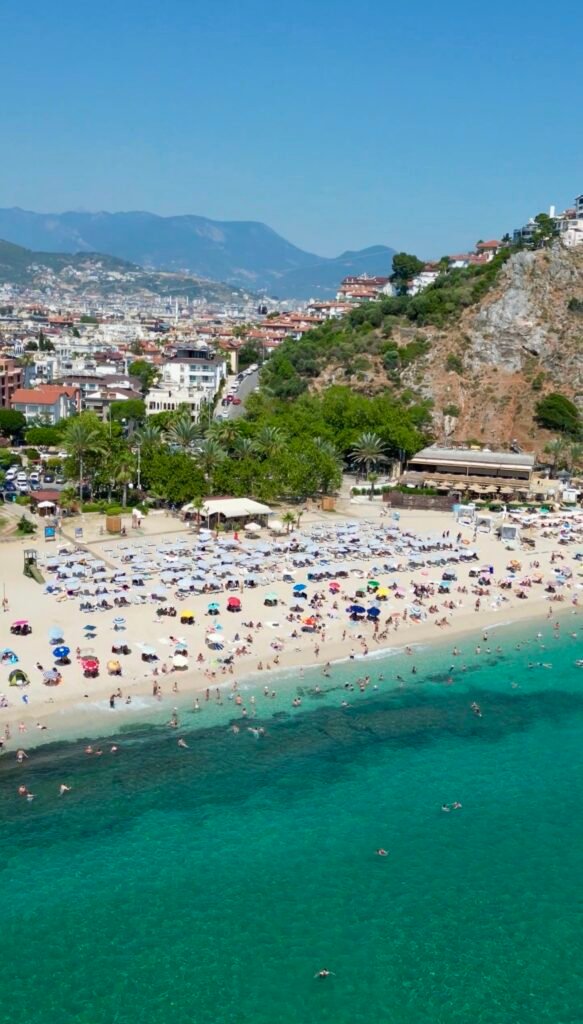
The center of Alanya near Cleopatra Beach remains attractive. On the contrary, the shortage of quality real estate in this area is only growing. Old buildings aren't the city's problem; they're raw materials for those who know how to recycle them. But renovation doesn't tolerate a superficial approach. It's a legal quest, a construction conveyor belt, and a financial model all rolled into one.
The successful projects of 2024–2026 have one thing in common: the investors didn't guess, they calculated. They didn't rely on luck; they insured every stage. They didn't skimp on specialists; they hired licensed engineers, urban planners, and lawyers. They didn't enter the market "as it turns out," but prepared pre-marketing six months before completion.
If you're considering purchasing an older property in central Alanya for renovation, start not with searching for a property, but with an audit of your resources: time, team, capital, and planning horizon. Complete the checklist, commission an IMA analysis, negotiate with the owners, and develop a cash flow model. Only then should you sign preliminary contracts.
Renovation isn't a lottery. It's a business with clear rules, measurable risks, and predictable returns. Those who approach it as a project will profit. Those who see it as a "quick fix" will lose capital. Alanya's city center awaits professionals. The next step is yours.